Semiarid Platform holds international seminar on climate and governance in Latin America in Recife
Initiative brings together organizations, communities and governments to share solutions to the climate emergency in the semi-arid region
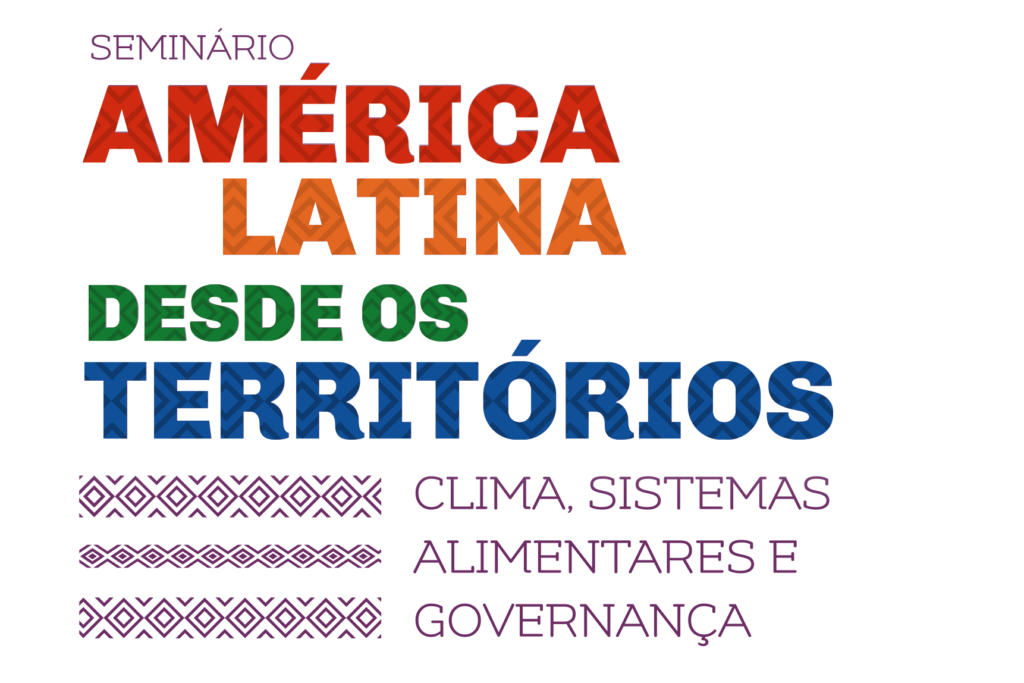
The Semi-Arid Platform of Latin America, in partnership with the Sabiá Center, is holding a seminar this April entitled “Latin America from the Territories: Climate, Food Systems and Governance”. The aim of the meeting is to broaden perspectives on the challenges and responses constructed in dry territories in the face of the climate crisis, with special attention to food systems, territorial autonomy and emerging forms of political governance.
Bringing together more than 40 voices from indigenous territories, peasants, civil society organizations, sub-national governments, networks and initiatives committed to building concrete solutions for a world in crisis, the initiative proposes two panel discussions on the morning of April 8, at the headquarters of the NGO Habitat for Humanity. Among the organizations confirmed are FUNDAPAZ, Funde, Isla Urbana, CETRA, ADESSU Baixa Verde, PATAC and the Tremembé Indigenous Council.
The first panel, “Food systems and the climate crisis” aims to reflect on how food systems have been affected by the climate crisis, and how indigenous communities, peasants and local organizations have sustained resilience and concrete responses, rooted in the life and history of these places. The proposal aims to draw a living map of experiences, identifying common convergences, threats, risks and lessons learned between Mexico, Central America, Brazil, Argentina, Colombia, among others.
The panel “Territorial autonomy, advocacy and governance” aims to discuss how political capacities and governance arrangements are strengthened in contexts marked by instability, inequality, conflict and climate emergency. By bringing together the views of civil society and public actors committed to the climate agenda, we aim to understand the importance of states, municipalities and other intermediate scales in building policies, pacts and responses that are closer to territorial realities.
The Semi-Arid Platform, whose focal point is the Sabiá Centre, is an articulation of more than fifteen social organizations spread across ten countries that have semi-arid regions connecting the countries and peoples of Latin America. It was created with the aim of revealing and systematizing experiences linked to the use and management of territories in the regions, strengthening civil society, generating proposals and influencing public policies. It seeks to address the challenges faced by indigenous and peasant organizations in relation to access, use and management of land, territory and natural resources.
For Carlos Magno Morais, coordinator of the Sabiá Centre and a member of the governance board of the Semiarid Latin America Platform, the meeting has a strategic role not only because of what it mobilizes in the present, but also because of what it projects for the future. “It prepares us for Caatinga Climate Week, which will take place in July in Caruaru, and which has been consolidating itself as a fundamental space to position the Caatinga at the center of the global climate debate. But before that, Recife fulfills an essential function here: listening to the voices of Latin America’s semi-arid regions, which have historically been treated as sacrifice zones, but which today are asserting themselves as territories of solutions,” Morais points out.
According to Carlos, when we look at food systems and territorial governance, we are actually looking at where there are already concrete responses to the climate crisis. These are experiences that show possible ways of adapting, built on the reality of indigenous peoples, peasant communities and local organizations.
“At the same time, this meeting invites us to reflect on the political direction of the region. We are living in a context of profound transformations, and political decisions, or the lack of them, have a direct impact on people’s lives. International studies already indicate that millions of people in Latin America could be forced to migrate by 2050 due to climate change, a scenario that tends to worsen in the absence of consistent public policies or when they move in the opposite direction. That’s why, more than just a space for debate, this is a space for affirmation: climate adaptation necessarily involves the territories, the valorization of their knowledge and the construction of policies that are equal to the challenges already posed,” Carlos concludes.