
New York? This is Caatinga Climate Week, straight from the semi-arid region of Pernambuco.
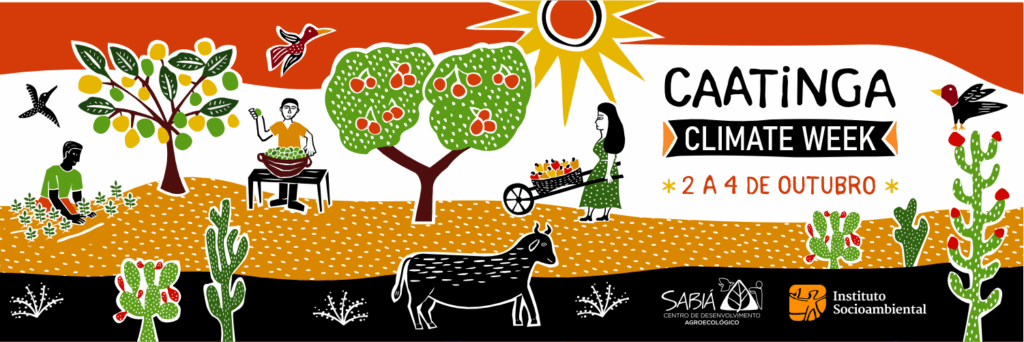
From October 2 to 4, Centro Sabiá, the Socio-Environmental Institute (ISA) and partner organizations are holding Caatinga Climate Week, an initiative that aims to put the biome at the center of the national and international climate debate, especially in the context of COP30.
Over the course of three days, an expedition will visit rural experiences of adapting to climate change in the territories of agroecological family farmers, land reform settlers, quilombolas and indigenous people.
Detailed program
- October 1st
Arrival of the delegation in Recife and departure for Caruaru. - October 2nd
Morning: Visit to Climate Adaptation Experiences in the Semi-Arid, in Caruaru and Vertentes.
Afternoon: Opening Plenary at the MST’s Normandia Settlement in Caruaru. Lunch on site, with a menu by Chef Thiago das Chagas.
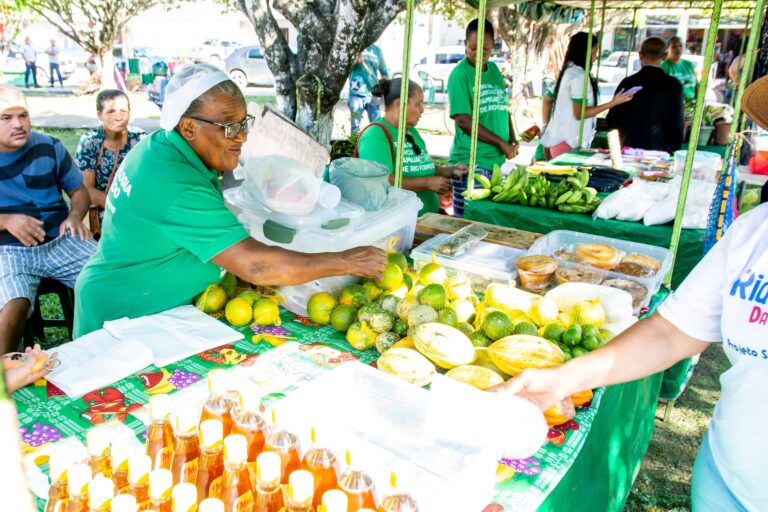
Evening: Festa Junina (Arraial da Adaptação) with typical food and drink stalls. - October 3
Morning: Travel to Garanhuns.
Morning/Afternoon: Parallel visits and group sessions to strategic communities:
Creole Seed Network for Climate Adaptation, Black Women and the Struggle for Climate Justice in the Castainho Quilombo, Escola dos Ventos, in Caetés, about the community affected by the installation of a wind energy complex.
Late afternoon: Travel to Arcoverde.
Evening (7pm): Screening of the film “O Bem Virá”, by Uilma Queiroz, at Sesc Arcoverde. - October 4
Morning: Visits to archaeological sites in the Catimbau National Park.
Afternoon: Final Plenary at the Catimbau Ecosite in Buíque, followed by a collective lunch.
End of the day: Return to Recife.
The proposal is to give visibility to the solutions built by local communities in the face of the challenges posed by the climate crisis and to bring together indigenous and quilombola leaders, representatives of social movements, experts, public authorities and managers of global funds in an immersive program in the semi-arid region of Pernambuco.
The Caatinga and the Climate
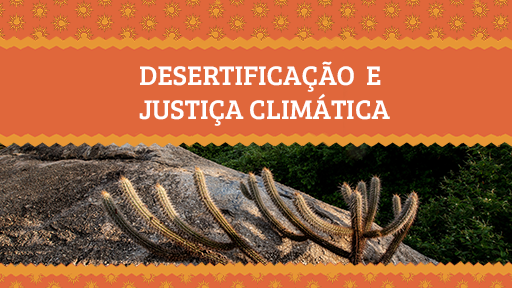
The Caatinga, Mata Branca, names for this biome that is 100% Brazilian and is considered an exclusive natural heritage, sheltering typically national fauna and flora and hundreds of species that exist nowhere else on the planet. The Semi-Arid forest is present in nine states, occupying 11% of the national territory, is very rich in biodiversity and very efficient at absorbing CO2.
Far beyond the widespread image of drought and beaten ground, the Caatinga is a mosaic of changing lives. Its landscape changes, whether with the rains or the droughts, revealing a rich scenario, varying in time, climate and territories. The biome sustains thousands of lives, even under extreme climatic conditions. The forest of resistance, of the Semi-Arid!
But the Caatinga is suffering from climate change and the threat of desertification. The biome has already lost almost half of its native vegetation and future forecasts are not at all encouraging. With an increasingly hot and dry climate, the White Forest has become an unfavorable environment for mammals and other species. According to a study published by Global Change Biology, by 2060 the region could lose up to 91.6% of its mammal species and 87% of its natural habitats.
It is currently under threat from chronic, illegal deforestation aligned with unsustainable economic practices. According to MapBiomas, the Caatinga lost 15 million hectares of primary vegetation between 1985 and 2020, which represents more than 26% of the forest. The survey showed a 40% decrease in natural water courses flowing through the region. Almost the entire biome in Brazil is classified as an Area Susceptible to Desertification (ASD).
The event is organized by Centro Sabiá and Instituto Socioambiental (ISA), in partnership with Articulação Semiárido Brasileiro (ASA), Movements of Landless Workers (MST), National Coordination of the Articulation of Black Rural Quilombola Communities (CONAQ),Articulação dos Povos e Organizações Indígenas do Nordeste (APOINME), Observatório do Clima, Plataforma Semiárido and Consórcio de Governadores do Nordeste and support from Cáritas
Alemã and Instituto Umbuzeiro.
Find out more
Centro Sabiá – Centro Sabiá is a non-governmental organization that for 32 years has been working to promote agroecological family farming, coexistence with the semi-arid region and the human rights of rural and urban farmers.
ISA – The Socio-Environmental Institute (ISA) is an OSCIP founded in 1994 that works to defend socio-environmental rights in Brazil. It works with indigenous peoples, quilombolas, riverine communities and extractivists, strengthening their political participation, culture, knowledge and income initiatives to protect Indigenous Lands and Protected Areas. With a presence in the territories of Rio Negro (AM/RR), Xingu (MT/PA) and Vale do Ribeira (SP), ISA articulates local and national actions through its regional and thematic programs.
Nothing found.