
Centro Sabiá e ISA colocam o Semiárido no mapa climático global: acompanhe a Caatinga Climate Week
De 1 a 4 de outubro, expedição vai mostrar soluções reais de adaptação à crise climática às vésperas da COP30; Siga a Caatinga Climate Week nas redes
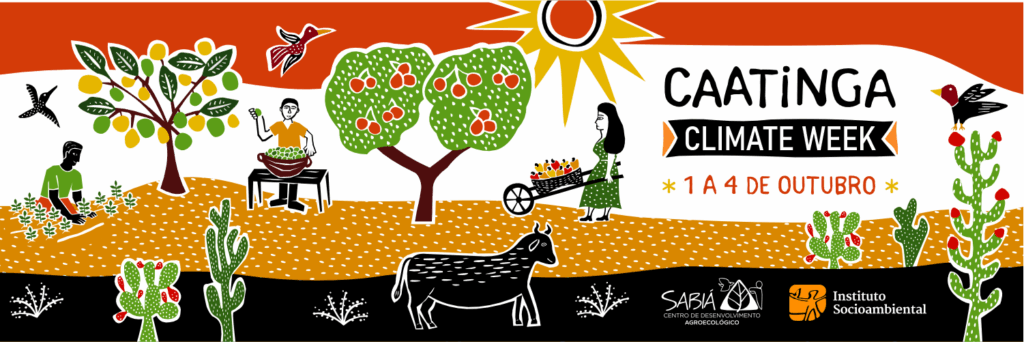
Nos dias 1 a 4 de outubro, o agreste pernambucano vai abrigar a Caatinga Climate Week, iniciativa do Centro Sabiá e em parceria com o Instituto Socioambiental (ISA), que é um chamado global para reconhecer o Semiárido como território estratégico na agenda climática, especialmente às vésperas da COP30.
Siga no perfil da Caatinga Climate Week no Instagram
Durante quatro dias, lideranças indígenas, quilombolas, assentados, agricultoras e agricultores agroecológicos, cientistas, movimentos sociais e gestores públicos vão percorrer mais de 400km, entre 7 municípios, onde já estão acontecendo soluções reais de adaptação à crise climática, principalmente em Caruaru, Garanhuns e Buíque.
The immersive experience is inspired by global climate weeks, such as the one in New York, and seeks to bring the climate debate to the territory most affected. The trail will be based on concrete experiences that show that the semi-arid region, far from being a land of scarcity, is a living laboratory of climate resistance and innovation, and that it can serve as a reference for other regions and countries that have been facing water scarcity and dealing with increasing times of drought and prolonged droughts.
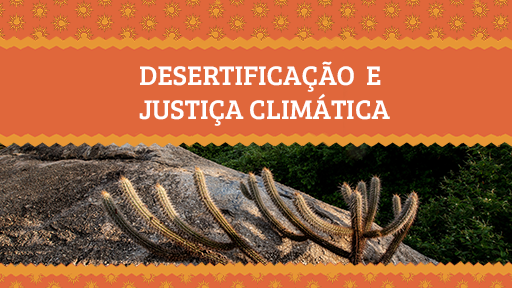
The Caatinga is suffering from climate change and the threat of desertification. The biome, which has already lost almost half of its native vegetation and has an increasingly hot and dry climate, has become an unfavorable environment for mammals and other species. According to a study published by Global Change Biology, by 2060 the region could lose up to 91.6% of its mammal species and 87% of its natural habitats.
MapBiomas shows that the White Forest lost 15 million hectares of primary vegetation between 1985 and 2020, which represents more than 26% of the forest. The survey showed a 40% decrease in natural water courses flowing through the region. Almost the entire biome in Brazil is classified as an Area Susceptible to Desertification (ASD).
For Carlos Magno, coordinator of the Sabiá Center, “the Caatinga can and should be a reference in the climate debate, because there are already several concrete experiences of climate adaptation, as well as being a territory that is facing the advance of renewable energy projects.”
Field visits
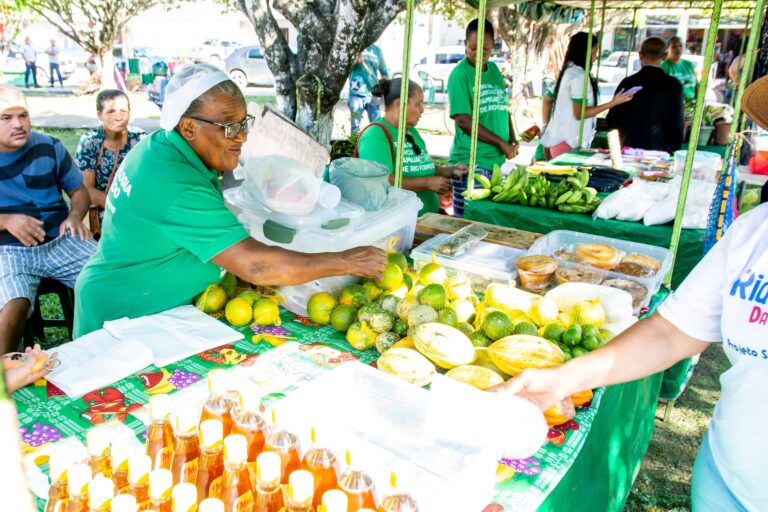
In Caruaru/PE, the activity “Between needles and hoes: the harvest of the women of Carneirinho” shows the fruits of the unity and resilience of women farmers who created the Association of Family Farming Women of Sítio Carneirinho. Their struggle to return to work in the countryside, through access to public policies to encourage rural development and the direct confrontation of climate change and industrial logic, will be points shared with the participants. The families currently contribute to quality food and female autonomy in the community.
In Vertentes/PE, the activity “From climate adaptation to coexistence with the semi-arid: social technologies in the Caatinga” shares the experience of Seu Zé and Dona Cilene’s family, who live with the particularities of the Caatinga biome while generating income and eating well. This has been possible thanks to social technologies for climate adaptation, which have contributed to rainwater harvesting, reuse of gray water, storage of Creole seeds and proper land management.
Back in Caruaru, Pernambuco, Macaxeira is the main topic of discussion. In the exchange “Macaxeira: memory, food and resistance in the semi-arid region”, farmers from the Serrote dos Bois community, who have had to adapt to rising temperatures and unstable rainfall, show what solutions they have found to continue planting this native and resilient species, which has a diversity of seeds and food production, such as flour, beiju and tapioca, which are produced in the Flour Houses.
In Caetés/PE, from the perspective of defending their territories, dozens of farming families from the agreste region of Pernambuco joined forces to debate the impacts of wind farms, creating the Escola dos Ventos (School of the Winds) in 2023. This organization brings together various peasant movements for debate, training and political action against the predatory occupation model of wind farms in the state and will be the starting point for the discussion “When the wind blows against: the experience of the School of the Winds for a just transition in the caatinga”.
In the municipality of Jucati/PE, “Exchanges of seeds and knowledge in the semi-arid region: a networked resistance strategy” is taking place between family farmers, social organizations and rural technicians, who are working together to defend the continuity of Creole seeds, through the Creole Seed Network of the Southern Agreste of Pernambuco (SEMEAM Network).
In Quilombo Estivas, black women are powerful examples of the struggle for climate justice in Pernambuco. And it is they who will lead the activity “Black women and the struggle for climate justice in Agreste de Pernambuco” in Garanhuns/PE. The community, made up of 200 families, stands out for the construction of productive backyards, associated with the cultural activities developed at the Zeza do Coco Cultural Space, where handicrafts, music and dance integrate women and young people into traditions.
Finally, the Xukuru village of Ororubá, the tree-passerine people whose agriculture is the basis of their spirituality, welcomes participants for an “Enchantment and Resistance” to share the Xukuru “cosmo-agriculture”. Rainfed agriculture, seasonal fruit and the raising of small animals interact with the maintenance of the community’s seed bank and seedling nursery, and it is through this integrated work that the people promote the practice of forest regeneration and dialogue with the living beings that make up the Caatinga. The activity takes place in Pesqueira/PE.
Caatinga Climate Week is organized by Centro Sabiá and Instituto Socioambiental (ISA), and has the following organizations in partnership: Articulação Semiárido Brasileiro (ASA), Movimentos dos Trabalhadores e Trabalhadoras Sem Terra (MST), Coordenação Nacional de Articulação das Comunidades Negras Rurais Quilombolas (CONAQ), Articulação dos Povos e Organizações Indígenas do Nordeste (APOINME), Observatório do Clima, Plataforma Semiárido and Consórcio de Governadores do Nordeste. Support comes from German Caritas and the Umbuzeiro Institute.
Service
What to do Caatinga Climate Week
When: October 1 to 4 inPernambucoComplete program:https://www.caatingaclimateweek.org.br/
Follow the coverage in real time on our Instagram:
https://www.instagram.com/caatingaclimateweek/
Nothing found.