Rural youth in the fight against racism
By Sival Fiuzastudent of Letters at UFRPE/ UAST and Young Agroecology Multiplier
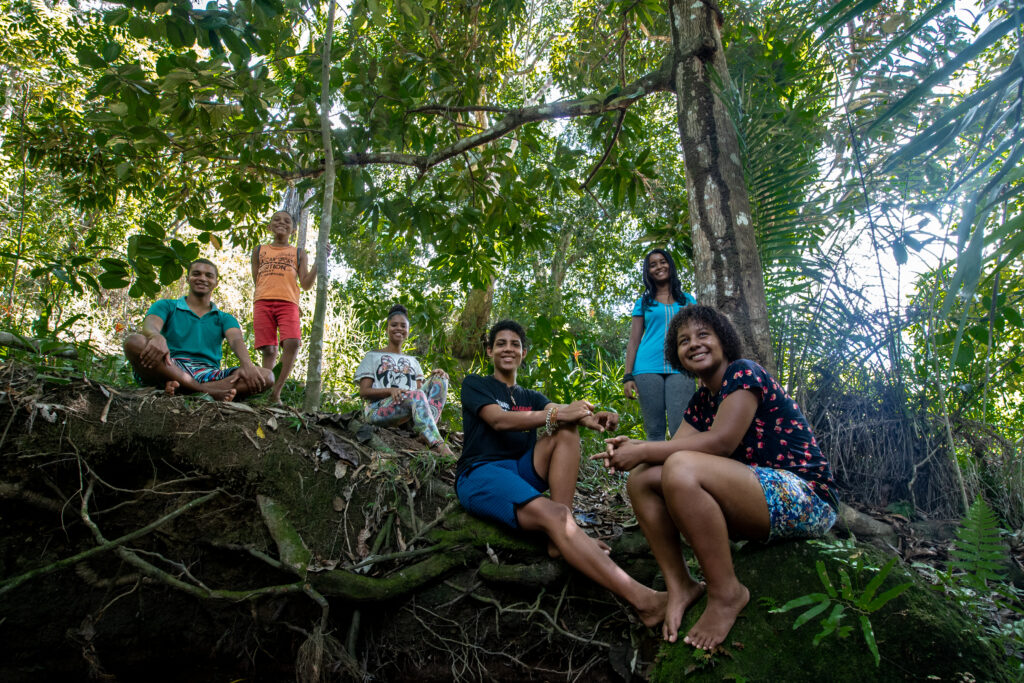
In rural and urban areas, racism manifests itself in different ways, but oppression is one and the same. While in the cities prejudice appears in unequal access to employment, police violence and marginalization, in the countryside it hides behind the denial of basic rights, the lack of public policies and the invisibility imposed on rural, indigenous and quilombola communities.
Rural youth face the weight of structural racism on a daily basis. In the Sertão do Pajeú, in the municipality of Serra Talhada, the first quilombola community was only recognized in 2013 – a delay that reveals decades of invisibility and denial of rights. This late recognition is just one example of the state’s failure to guarantee territorial justice and dignity to traditional rural peoples. Meanwhile, land concentration and the expansion of agribusiness are advancing on traditional territories, threatening ancestral ways of life.
In rural and quilombola communities, the fight against racism takes place on a daily basis: in collective organization, in the preservation of Creole seeds and in resistance for territory. Many young people don’t even have basic documentation, which prevents them from accessing social programs, and they face the neglect of the government, which ignores their demands. In Pernambuco’s Sertão, there is a common lack of high schools and precarious school transport, forcing many to abandon their studies or migrate to urban centers. Environmental racism is also revealed in the drought intensified by poor water distribution, the lack of technical assistance for family farming and the abandonment of rural schools.
But resistance persists. Youth collectives, quilombola groups and agroecological movements and organizations such as Centro Sabiá have strengthened the struggle of these young people, promoting training on rights, encouraging sustainable production and pushing for affirmative policies. The titling of quilombola lands is not just an agrarian issue, but a direct confrontation with the racism that denies these communities the right to exist.
Faced with these realities, it is clear that fighting racism in rural and urban areas requires more than symbolic recognition – it demands concrete actions that guarantee land, rights and dignity. The resistance of rural, quilombola and indigenous communities shows that transformation begins with collective organization and demands for territorial justice.
While the state fails to make amends for centuries of oppression, it is these voices that keep alive the struggle for a future where equal rights can be lived. The road is long, but every seed of resistance planted today is a step towards a Brazil that actually faces up to its past and builds a tomorrow without racism.