Semi-arid youth participate in COP30 preparatory plenary and defend climate justice
By Frances Andrade
Facilitator of the Semiarid Latin America Platform
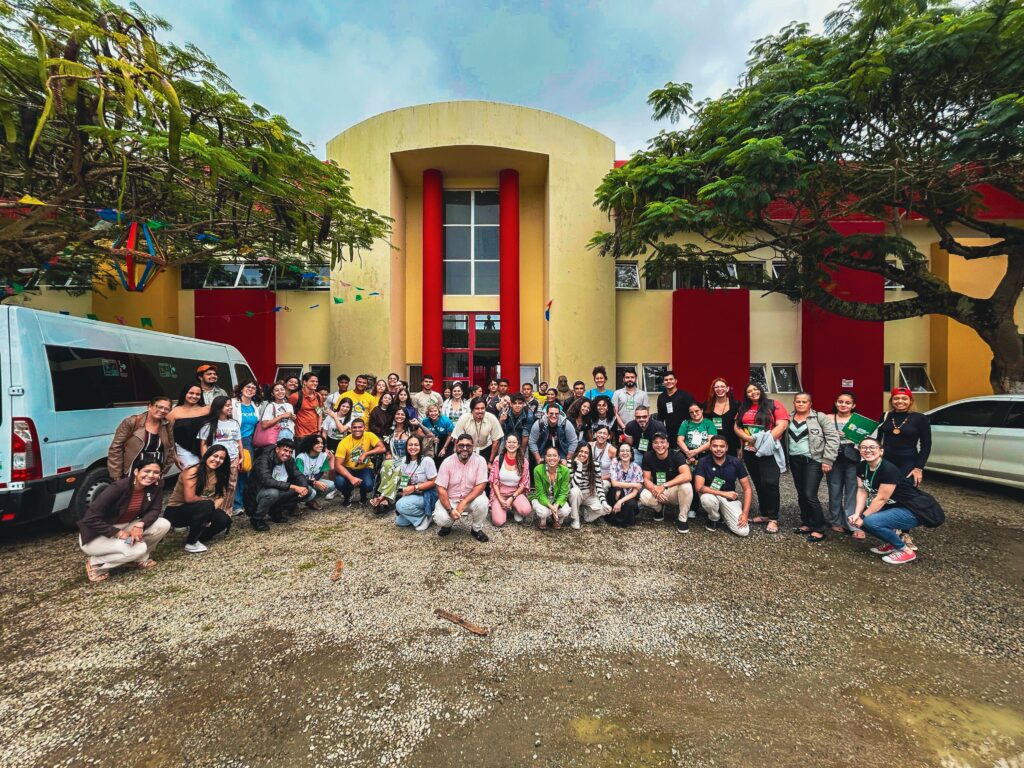
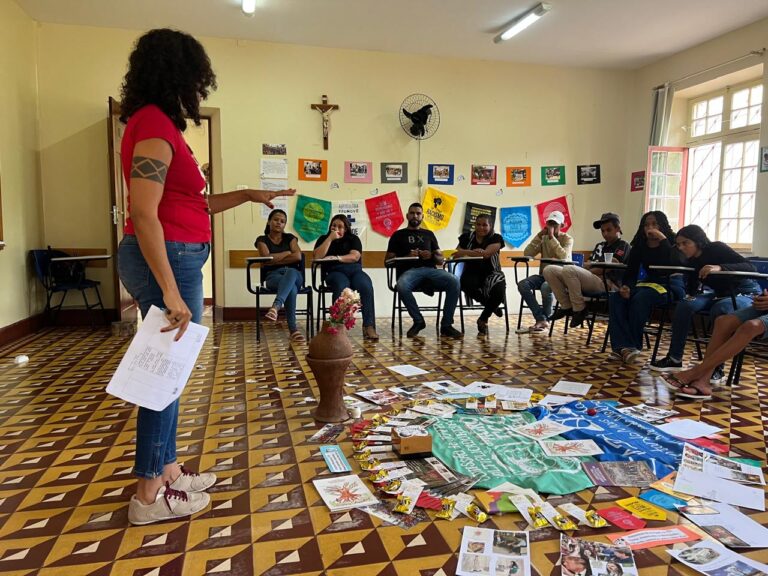
Ten young people from the Semi-Arid Youth Training Trail towards COP30, an initiative of the Semi-Arid Latin America Platform, took part in the Plenary of Youth in the Caatinga Biome, held on July 28 and 29 in Caruaru (PE). The meeting is part of a cycle of national dialogues aimed at building a platform of demands from Brazilian youth towards COP30, the UN conference on climate change that will take place in November 2025 in Belém (PA).
The plenary was organized by the National Youth Secretariat (SNJ), the National Youth Council (CONJUVE), UNICEF, the Government of Pernambuco and Caruaru City Hall, with the support of Terre des Hommes Schweiz. The initiative brought together young people from different regions of the country to debate climate justice and ensure that the voices of rural, peripheral and traditional youth are represented in global negotiating spaces.
For Adailma Ezequiel, from the Borborema Pole, young farmers are the first to feel the impacts of climate change. “We already know that the climate is erratic. When the suits start to feel it, we’ve been beaten up for a long time. Politics is built with the people. It’s not just the politician or the adult who makes politics – it’s us, together.”
During the plenary, Adailma highlighted the paradox between the preservation of the Caatinga and the advance of large energy projects in the territories. “It’s not about being against renewable energies, but about the way they arrive. There’s no way to produce food in areas taken over by wind and solar farms, because they require large tracts of land, which leads to deforestation.”
She defended the biome as a living space and essential for the lives of those who live there. “The Caatinga has immeasurable wealth – of flora, fauna and people. We have the same strength as the umbuzeiro and the juazeiro. We want a living, standing Caatinga that preserves its history and ancestry. A Caatinga where it is possible to live, to live, to plant and to have a dignified life,” she concluded.
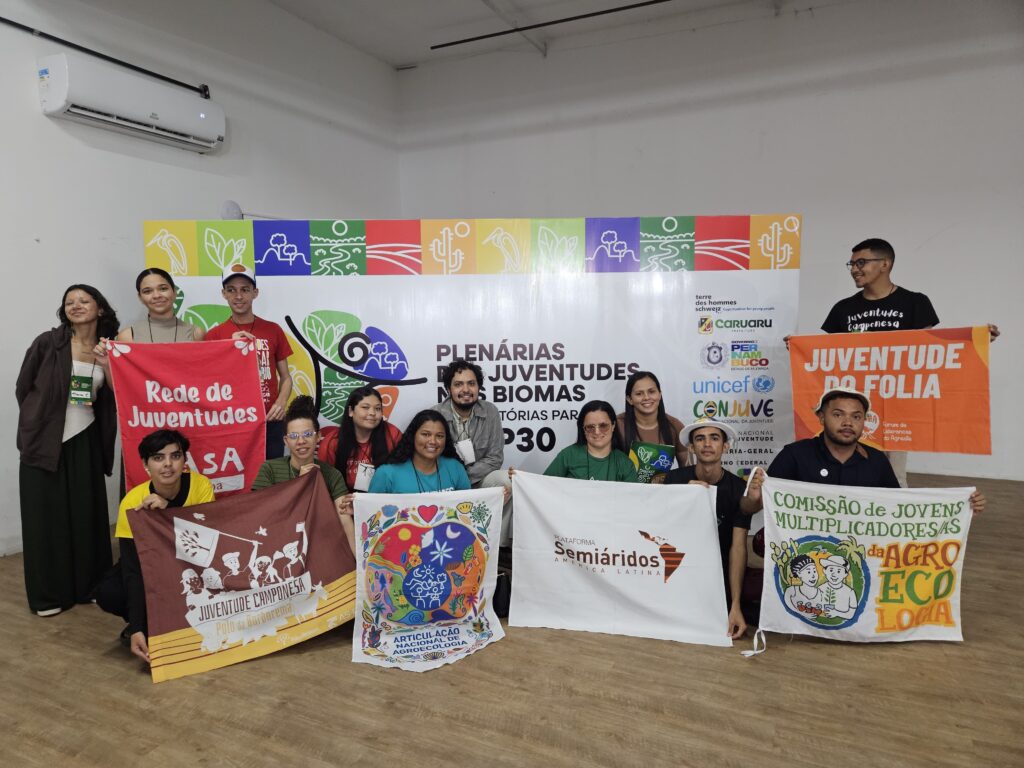
The participation of the Semi-Arid Platform reinforces the urgency of including the realities of rural territories and traditional communities in the international climate agenda. The meeting also highlighted the strategic role of agroecology as a tool for tackling the climate crisis, especially driven by young people, who promote sustainable practices through education, training and innovation.
“We don’t need to be experts or scientists. We’re from the territory and we understand what happens in it. Agroecology is our future, and the Caatinga needs to be recognized constitutionally so that we have more rights, support and access,” said Sival Fiuza, 22, a young quilombola from Ponta da Serra (Serra Talhada – PE) and a member of the Semi-Arid Platform.
On that occasion, Fiuza also wrote the following poem:
“In the hinterland of Pajeú, a land of struggle and resistance,
The strength of young people with determination and conscience springs forth.
In the plenary, the cry of the generation echoes strongly:
Preserving our Caatinga with justice and unity.The Youth Commission has been multiplying steadily,
Agroecology in the countryside, sowing knowledge.
We want the Caatinga alive, diverse, rooted,
With the people in charge, with their heads held high.We want trees, animals, seeds and hearts,
Respect for nature and access to education.
We don’t want deforestation, nor thirst, nor oppression,
We want water from cisterns and food on the ground!
Let the politicians listen to what the youth are saying:
Caatinga is our home, it is our root and our matrix.
With autonomy and land, life will flourish,
And the sertão, so punished, will become a flower.”