

Extreme drought in Pernambuco deepens the vulnerabilities of family farming in the semi-arid and Caatinga regions
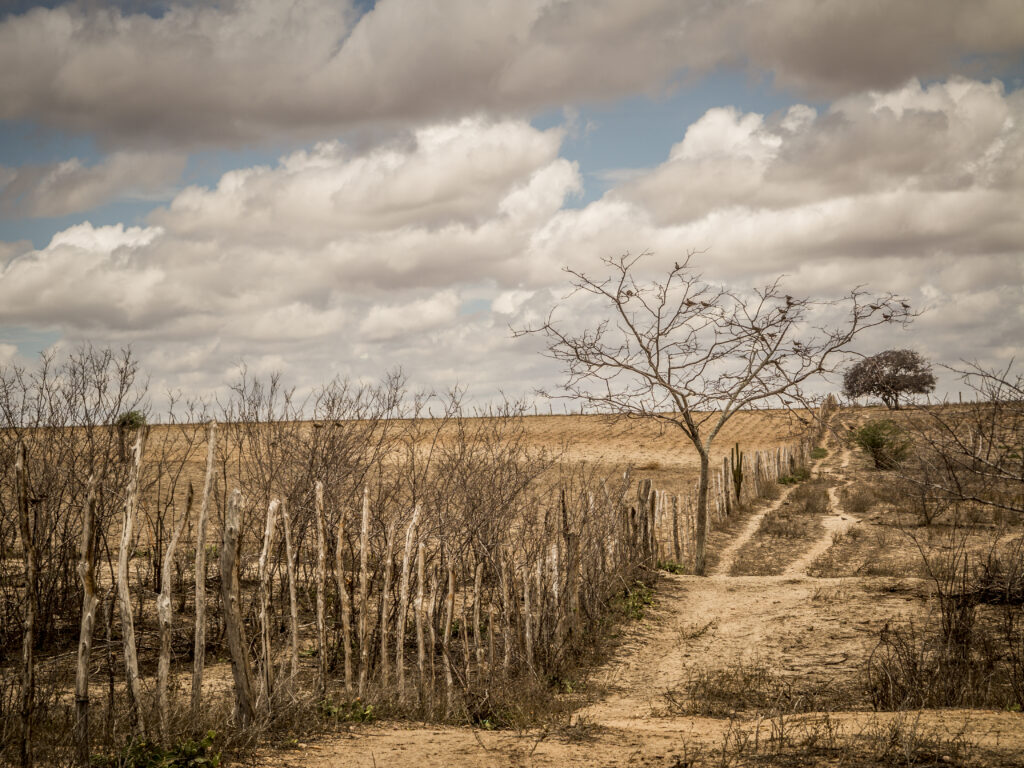
A report by the Pernambuco Water and Climate Agency (APAC) shows that extreme drought is already affecting around 31.5% of Pernambuco’s municipalities, with the greatest incidence in the Sertão and Agreste. In all, 58 municipalities are facing a critical situation, marked by the risk of crop losses, animal deaths and severe water shortages, posing a direct threat to the livelihoods of thousands of families who depend on family farming.
The intensification of the drought directly affects production systems based on subsistence crops and small livestock, generally with low irrigation infrastructure. The reduction in rainfall, coupled with increased evapotranspiration, compromises soils, pastures and reservoirs, resulting in production losses, increased costs and weakened income for farming families, who are already historically vulnerable to the effects of climate change.
Since December 31st, the government of Pernambuco has declared a state of emergency in 107 municipalities for 180 days, with the aim of mitigating the impacts of the hydrological drought on reservoirs and water supply. In addition to the production losses, the drought compromises the food security of rural families, increases dependence on the market and price fluctuations and intensifies migratory processes, especially among young people, threatening the permanence of rural communities and social and cultural reproduction in the territory.
For Maria Cristina Aureliano, general coordinator of Centro Sabiá, an organization that works with technical advice in the territories where the drought has worsened, the extreme drought highlights a policy model that still responds to the Semi-Arid with emergency and unstructured actions. “Family farming doesn’t need makeshift solutions, but permanent policies for living in the semi-arid region, which guarantee access to water, ongoing technical support and water security for the people.”
The Sabiá Center also stresses that experiences based on social technologies, agroecology and technical assistance show that it is possible to produce food, generate income and conserve the Caatinga even during periods of drought. “In territories where the Caatinga has been restored with agroforestry systems, the springs continue to have water, maintaining production and food security for farming families. Strengthening family farming is a strategy for tackling climate change, fighting hunger and defending the biome,” says Maria Cristina.
Nothing found.