


The Unified ATER System (SUATER) for feminist, anti-racist and agroecological ATER
By Aniérica Almeida
Technical Pedagogical Coordinator of Centro Sabiá
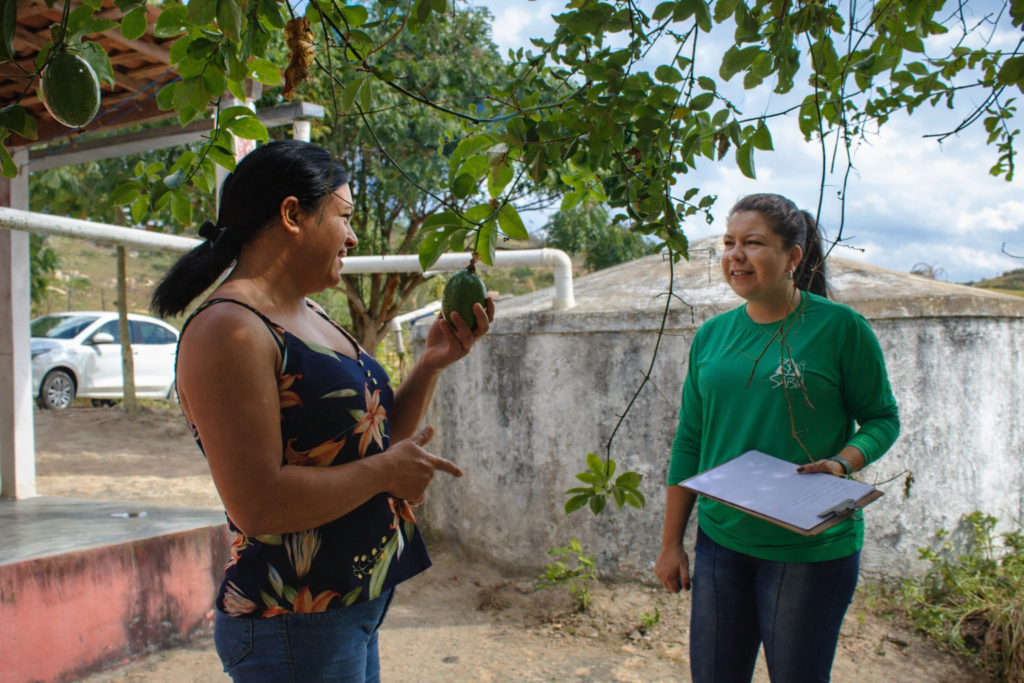
In Brazil, Technical Assistance and Rural Extension (ATER) has undergone various attempts to establish itself as a public policy for the peoples of the countryside, waters and forests. Seen as an important strategy for advancing rural development, in the past ATER brought a homogeneous view of rural territories, with a perspective of unilateral dialog and an approach focused on the male public, which reinforced the invisibility of women’s work.
It was only in the 2000s, after a lot of reflection by rural social movements and civil society organizations working with technical advice in rural areas, that ATER began to incorporate the political agenda of feminism and agroecology.
The enactment of Law No. 12.188 of 2010 (National ATER Policy) is a commitment to ensure that ATER is continuous, based on non-formal education and aimed at working with the diversity of people in rural areas. With the law enacted also comes a historic recognition of the importance of the work carried out by women. It guarantees the implementation of actions aimed at promoting women’s personal, political and economic autonomy.
From then on, some initiatives aimed specifically at women farmers emerged, which were powerful and showed symbolic and concrete results in their lives. The current ATER Law does not have mechanisms to guarantee budgetary resources for medium and long-term actions, as the law stipulates. What we do have are specific calls for proposals such as ATER Women and ATER Agroecology, which have been discontinued and extinguished by governments that do not have agroecological family farming as their agenda.
Currently, there is great hope that ATER will become a state public policy. A bill is being processed to create the Unified ATER System (SUATER), which will be coordinated on a federative basis (Federal District, States and Municipalities), with its own budget fund (FUNDATER) and decentralized control mechanisms, guaranteeing effective popular participation. The expectation is that SUATER will strengthen the National Policy and promote dialogue and recognition of the role and historical importance of women’s work, an instrument against machismo and racism, which are so ingrained in rural areas. Forward! No Feminism, No Agroecology!
Between March 24 and 27, 2026, Brasilia hosted the Third National Conference on Sustainable Rural Development, where we reaffirmed that the SUATER we want should promote feminist, anti-racist and agro-ecological ATER.
Nothing found.