

Agroecological transition and sovereignty in the productive backyards of women in the semi-arid region
By Rivaneide Almeida
Territorial coordinator of the Sabiá Center
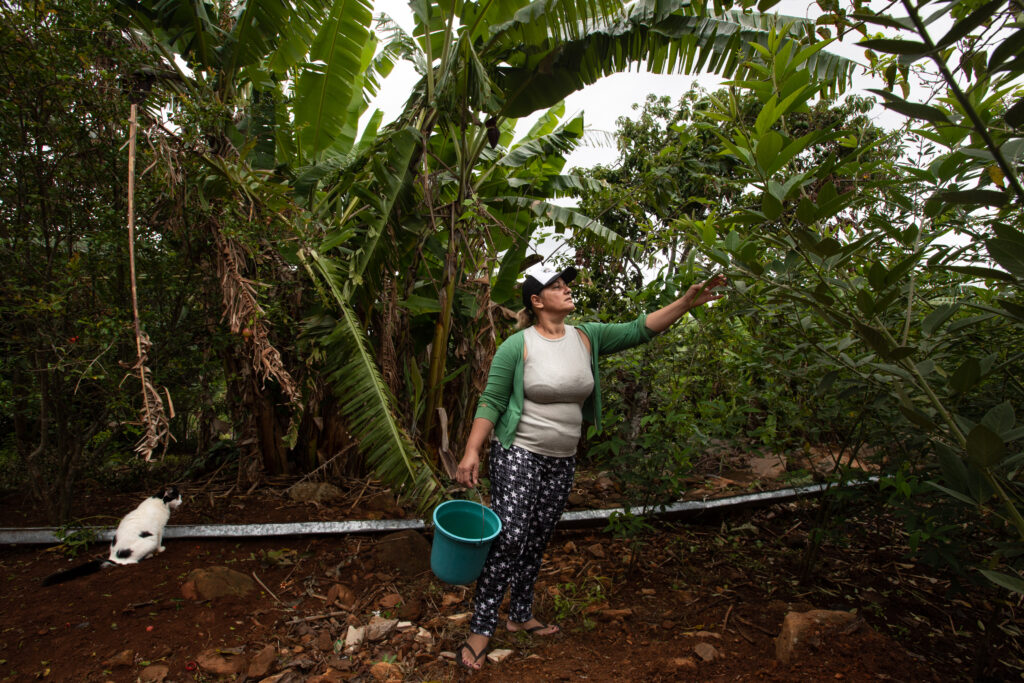
It’s impossible to think about the agroecological transition in the semi-arid region without the active and protagonist participation of women farmers: they are pioneers in adopting agroecological practices, as they already experience them on a daily basis, raising small animals, caring for water and in the productive backyards for which they are responsible.
Backyards are strategic spaces for producing real food, strengthening sovereignty and promoting food security. In this sense, the Technical Assistance and Rural Extension (ATER) developed in the Backyards for Sovereignty project, through a partnership between Centro Sabiá (PE) and CETRA (CE), strengthens and expands practices that are already part of the daily experience of these farmers in various territories and biomes in Pernambuco and Ceará.
Based on participatory methodologies, agroecological and feminist ATER recognizes and values local knowledge, promoting exchanges of knowledge, debate on the fair division of domestic work, experimentation with social technologies and productive planning in the backyards. This process contributes to improving agroecological management, diversifying food production, improving the sustainable use of water and soil and, above all, valuing and giving visibility to women’s work spaces, which are fundamental elements for living well in the countryside.
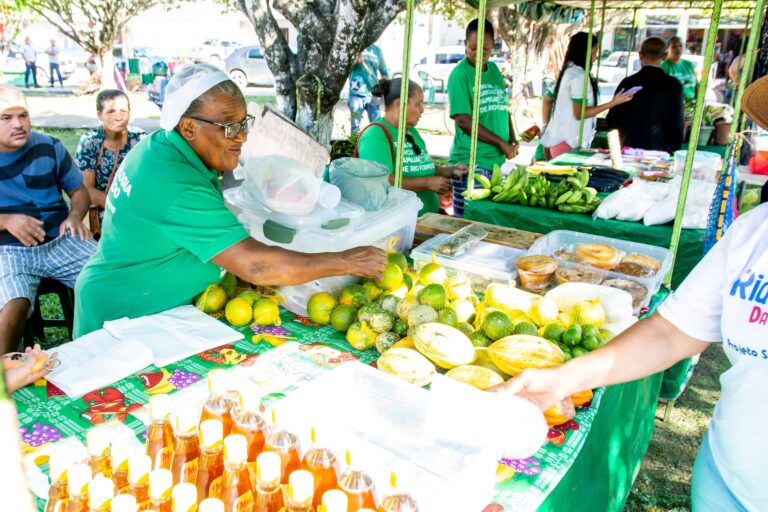
In addition, this new ATER proposal encourages the autonomy of women farmers by supporting the organization of production, the recording of productive activities and the economic valuation of what is grown in the backyards through Agroecological Logbooks. By making visible women’s contribution to generating income and healthy food for families and communities, their role in decisions about production and the management of family and territorial resources is strengthened. In this way, the productive backyards become true spaces for agroecological innovation, where biodiversity, care for native forests, healthy food production and income generation come together. By supporting these processes, the project contributes to consolidating concrete paths of agroecological transition in rural territories, with women farmers as the protagonists in building more resilient, sustainable and fair production systems.
Nothing found.