

ATER and Public Policies: the experience of the ATER Women project
Juliana Peixototerritorial coordinator of the Sabiá Center, and Iris Maria Silvatechnical advisor to the Sabiá Center
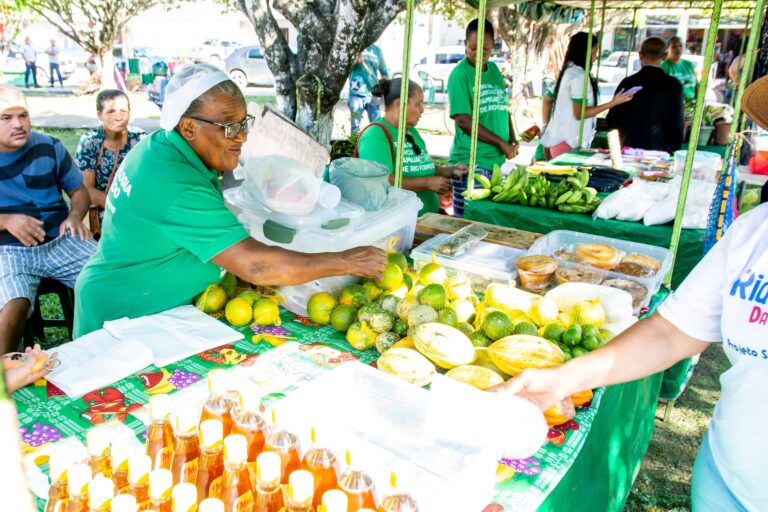
The ATER Rural Women, Autonomy, Food and Healthy Lives program, which ran from 2023 to 2025, had a positive impact on the lives of the women who benefited from it. The action involved all of Brazil’s states, benefiting more than 12,000 women from the countryside, waters and forests. This was a historic milestone in the resumption of public ATER policies in Brazil, after a period of being scrapped, as a result of investment by the Federal Government through the National Agency for Technical Assistance and Rural Extension (ANATER) and the Ministry of Agrarian Development and Family Agriculture (MDA).
The implementation of the project sought to increase women’s economic autonomy, food and nutritional security, the sustainability and resilience of their agro-ecosystems, the empowerment and democratic participation of women in community organization and management spaces, the improvement of their quality of life and the guarantee of living without violence.
In Pernambuco, Centro Sabiá was one of the organizations that ran the programme in the municipalities of Caruaru, Cumaru and Bezerros, in the Agreste region, assisting 300 women, including family farmers and quilombolas. Around 50% of this public did not have the National Family Farming Register (CAF), known as the farmer’s identity card, a mandatory document for access to dozens of public policies. Until then, this group had not accessed any of the public policies that give rural families better living conditions and dignity.
In this sense, organizing them to acquire the CAF was fundamental for them to be able to access ATER (Technical Assistance and Rural Extension) and other benefits such as the National Program for Strengthening Family Farming (PRONAF), the National School Feeding Program (PNAE) and the Food Acquisition Program (PAA). This was possible thanks to the joint work with the partners authorized to issue the register, such as the Agronomic Institute of Pernambuco (IPA), the Rural Workers’ Union (STR), the Family Agriculture Workers’ Union (SINTRAF) and the municipal agriculture departments.
During the project period, individual and collective activities were carried out which addressed production, environmental and social issues. In addition to the program, the beneficiaries enrolled in the CadÚnico also had access to Fomento Rural, which guaranteed productive and social support in a concrete way, through the transfer of a non-refundable financial resource of R$4.6 thousand. This investment enabled women living in extreme poverty to strengthen their respective production projects.
Around 270 women have accessed the Fund and it has been injected into communities and municipalities, strengthening the local economy, structuring and expanding production capacity, diversifying production, food quality, family income and women’s empowerment.
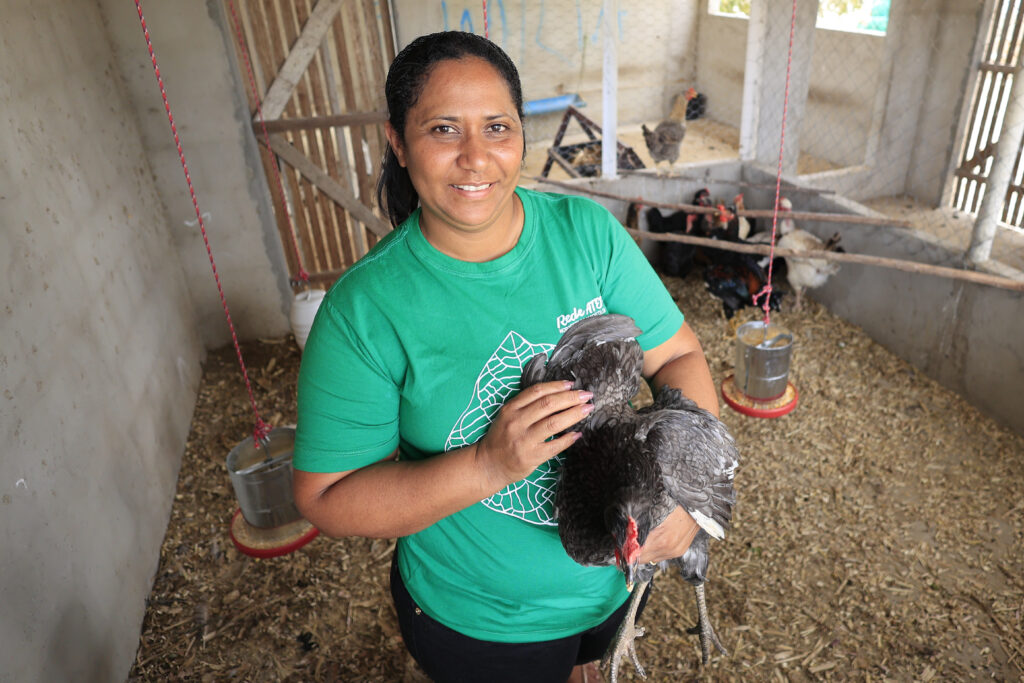
For farmer Luciana França, from the Riacho do Boi community in Cumaru, receiving ATER and Fomento together was fundamental to increasing her production and generating income. “F t was the realization of a dream, because I had always wanted to invest in keeping chickens, but I couldn’t afford it, since you need a large number of animals and quality feed. With this opportunity, I built a chicken coop and bought feeders, drinkers, laying pullets and chickens. Then I found a buyer, to whom I supply the eggs every week. I made this dream come true “, said the farmer.
The testimonies reveal the contributions of the ATER Women program to improving quality of life and strengthening food production and animal husbandry. Through this initiative, women’s empowerment has come about through the promotion of food and nutritional security, productive and financial autonomy and the exchange of knowledge as a collective of women from the semi-arid region.
Nothing found.