
The Agroecological PNAE and women farmers
By Maria Cristina Aureliano
General Coordinator of Centro Sabiá
The AGROECOLOGICAL PNAE is an initiative of the Comida do Amanhã Institute, the Zero Hunger Institute and the Regenera Institute, Brazilian non-profit organizations with the support of the UN World Food Programme and the Rockefeller Foundation. Its aim is to boost the agroecological transition of family farming through school meals, using the law that determines the purchase of food from family farming for the National School Feeding Program (PNAE) as an incentive, and the 30% increase when this food is produced in an agroecological way, guaranteeing a market and fair prices for this type of production. In 2026, this market will be strengthened by an increase in the transfer from the National Education Development Fund (FNDE), for the purchase of food from family farming in the PNAE, from 30% to 45%.
The initiative aims to increase the supply of fresh, healthy food in schools, strengthen family farming, generate income for families and boost the local economy. It also aims to strengthen the sustainability and resilience of local food systems. The project is being developed in 11 municipalities in 4 Brazilian states. In Pernambuco, the city chosen was Caruaru. The expectation is that this diversity of experiences will provide relevant lessons to influence public food security policies in Brazil and around the world.
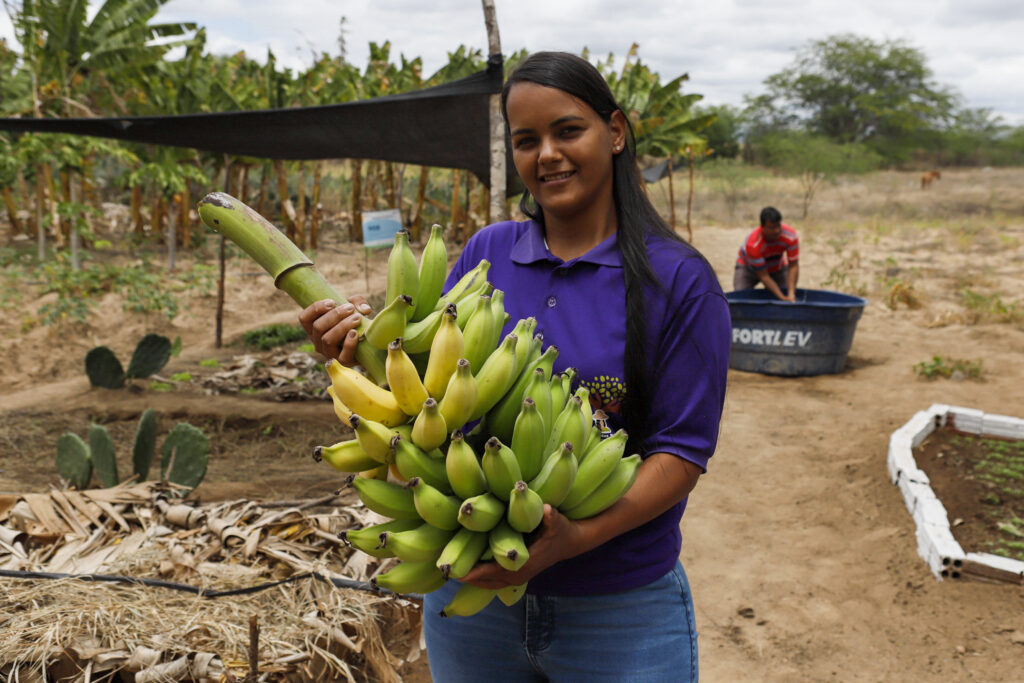
Centro Sabiá was invited to be the technical advisory organization for the project in Caruaru, which will involve 30 farming families. One of the criteria for choosing the families was community organization, marketing at agroecological fairs and regular supply to the PAA and PNAE. In this process, the Association of Women Family Farmers (AMAF), from the Carneirinho community, stood out for its organization in the production of eggs and poultry, vegetables and products for the PNAE.
Between 2023 and 2025, the women of AMAF received technical advice from the Sabiá Center through the ATER Women Program of the Ministry of Agrarian Development (MDA), and accessed development resources to structure their production and breeding. This good combination of technical advice, resources to invest in production and the women’s organization caused a revolution, tripling the amount accessed and deliveries to the PNAE in this period. Today, they are reaping the rewards and want more and more communities to have access to ATER policies because they open up opportunities for women.
Nothing found.